By Analyst Team · Updated 2026-08-02 · 12 min read
Choosing an ip-tv provider doesn’t have to be a gamble. The interface above shows what you should expect: one clean menu that leads to live TV, sports, movies and catch-up services without flipping between six different apps. But the interface only matters if the service behind it is honest, stable and legal. This buyer’s guide helps you avoid the regret most people feel after picking a provider based on channel count alone. By the end, you’ll know how to choose an ip-tv provider for sports, family viewing, or a budget-friendly replacement for cable TV.
Need a provider that actually works? We use the checklist below to find one. Start with the tested ip-tv provider.
Compare the tested IP-TV provider →LIMITED TIME AVAILABILITY
Unlock Full ip-tv provider Access
Secure special promotional rates instantly before the window closes. Lock in your pricing model today before plans return to standard regional metrics.
1. Why Many People Regret Their Choice
Most ip-tv provider regret stories start the same way: the price looks unbeatable, the channel list promises every sport on the planet, and the checkout takes less than two minutes. Then Saturday comes, the big match is about to start, and the stream buffers for ten straight minutes. You refresh, switch channels, restart the app, and still miss the goal.
The problem isn’t the technology. It’s the provider. Many sellers buy a reseller panel, load it with thousands of streams, and have no real infrastructure, no license, no support team, and no plan for peak traffic. When something breaks, they disappear and reopen under a new name.
The real cost of a bad IP-TV provider
You lose more than money. You lose the match, the movie night, and the confidence to stream again. Worse, unlicensed IP-TV apps can expose your home network to malware or phishing attacks. That’s why our number one piece of advice is simple: never let a cheap ip-tv provider become an expensive lesson.
When people search for the “best ip-tv provider 2026”, they often assume the winner has the largest channel list. In reality, the winner is the provider that keeps working when you need it most.
2. How to Choose an IP-TV Provider: 10 Criteria
Use this checklist to compare candidates. If a provider fails on several of these, move on. If it passes all ten, you’ve likely found a partner you can keep for years.
1. Licensing and business transparency
Check who operates the service. A legal ip-tv provider can tell you which rights they hold. If the site hides the company name, physical address, and contact details, you’re not buying a subscription; you’re buying a disappearance risk.
2. Server infrastructure and buffering
Ask about server load and content delivery networks. A reliable ip-tv provider no buffering can usually show a status page, explain their server locations, and offer backup streams. No provider can guarantee zero buffering on a weak internet plan, but they should handle peak times with grace.
3. Device compatibility
The best ip-tv provider 2026 should have apps for Android TV, Fire TV, Apple TV, iOS, Android, and maybe even your smart TV’s native platform. If the service only gives you a generic M3U URL, you’ll spend more time configuring than watching.
4. Sports coverage and stream quality
For an ip-tv provider for sports, look for 50 or 60 fps streams, multiple backup channels for the same match, and language options. The channel list should name the leagues, not just say “sports package.” A free trial is the only way to see if the stream quality holds.
5. Simultaneous connections
Allow one connection per active screen. Some providers advertise “one connection” but when one person watches the TV while another opens the phone, the first device is logged out. For families, two or three connections are worth paying extra for.
6. EPG, catch-up and cloud DVR
A modern IPTV service vs cable TV should include a full electronic program guide and catch-up for major channels. If the provider can’t supply basic EPG, expect a clunky experience on every device.
7. Payment safety and refund policy
Use a credit card or PayPal so your money is protected. The cheapest ip-tv subscription is not cheaper if you can’t dispute a failed charge. A refund policy also tells you whether the provider expects you to stay because they’re good or because they trapped you.
8. Customer support
Test support before paying. Send a question at 9 PM and measure the response time. If there’s no live chat and the email bounces, your provider won’t be there after you pay.
9. Trial period
Never buy a one-year plan without testing. A legitimate provider offers a 24-hour or 3-day trial for a small fee. If a provider refuses, they are already telling you how the relationship will work.
10. Fair-use limits and hidden restrictions
Read the terms. Some ip-tv provider plans cap simultaneous streams, throttle heavy users, or block VPNs. Know the rules before you commit.
3. What You Need to Know About the Current Market
The IPTV market in 2026 is split into two very different worlds. On one side, licensed operators buy rights, build their own servers, and sell subscriptions that genuinely replace cable TV. On the other, resellers repackage streams from unknown sources and disappear with your money. You need to know which one you’re dealing with before you buy.
Where to buy ip-tv legally is the first question to answer. A legal provider will have a public company profile, clear licensing, secure payment methods, and customer support that doesn’t hide behind a Telegram account. Legal services are often only slightly more expensive than shady ones — the extra few dollars buy reliability and peace of mind.
The dashboard below shows what a premium legal ip-tv provider subscription looks like in 2026. Notice the 4K live channels, sports section, and on-demand library. This is the kind of interface that makes IPTV service vs cable TV comparisons interesting.
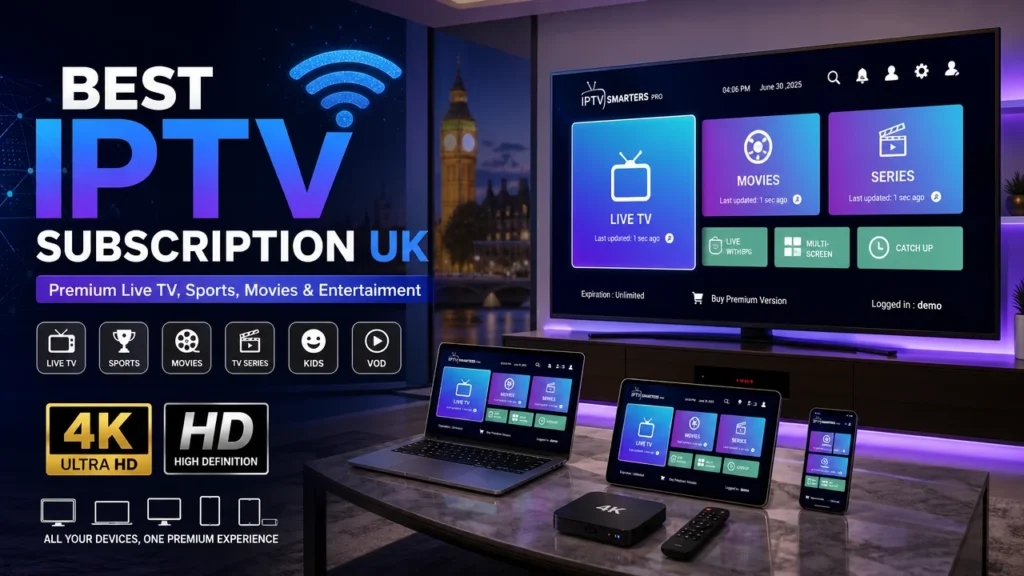
The dashboard above matters because it shows the promise of IPTV: all your content in one app, without a coaxial cable or set-top box. The value is real, but only a well-run provider can deliver it consistently. If you want to test this experience without risk, the official offer at the end of this guide is the one we evaluated for this article.
Prefer to start with a direct recommendation? Use the button below to see the exact package we tested.
Unlock complete high-definition information and priority access packs.
Claim This Special Offer for ip-tv provider →4. Questions to Ask Before Buying an IP-TV Provider
Ask these questions before giving anyone your email, let alone your credit card. Written answers count. Vague promises don’t.
1. Who is the official operator, and can you prove it? A real company will tell you its registered name and country. Anonymous sellers won’t survive the first refund request.
2. Which server providers do you use? The answer should include real data-centre names, not “our servers”. If they can’t explain their infrastructure, they don’t own it.
3. What happens during peak match hours? Ask directly: “If 10,000 people watch the same game at the same time, will my stream stay in 4K?”
4. Can I have a 24-hour trial? A trial should match your real use: sports, evening family streaming, and a second screen. If the provider only offers a “server test” link, your experience will still be a mystery.
5. Which apps do you support on my device? The best ip-tv provider 2026 has a native app for your platform, not just a playlist file that you have to sideload.
6. Do you offer 60fps sports streams and backup channels? Standard 25fps channels can look fine for news, but sports need higher frame rates.
7. How many simultaneous connections are included? If your household has three TVs and two phones, you need a plan that covers them.
8. What is the refund policy if the service fails during a live event? A provider that relies on stolen streams will never agree to a clause like that.
9. What do long-term customers say on Reddit? Search “ip-tv provider reviews Reddit” and look at the provider’s response to complaints. If they delete posts or argue with every negative review, that’s a warning.
10. Can I pay by credit card with buyer protection? If the only options are crypto, bank transfer, or a sketchy card processor, you have no way to fight back when the service disappears.
5. Warning Signs to Spot
Even when a website looks professional, find these red flags before you click “buy”.
- “Lifetime” subscriptions. No legitimate IPTV provider can afford to give you lifetime rights to live TV channels. Lifetime deals are a cash grab, not a business model.
- No trial, only annual plans. If they won’t let you test the service for a few dollars, they know you won’t stay once you see it.
- Payment by crypto or bank transfer only. That’s how you lose your money and your buyer protection.
- No public company details. No address, no registration number, no named support team.
- No status page and no server transparency. A reliable ip-tv provider no buffering should be able to show where their streams come from.
- Every premium sports channel for under $10. If it looks too good to be true, it’s probably not licensed.
- Generic apps that are just playlist loaders. If the app says “TiviMate is included” but no custom app exists, the provider hasn’t invested in anything.
Be careful with ip-tv provider reviews Reddit too. Search “IP-TV provider reviews Reddit” and then look at the accounts that reply. If the recommendation comes from an account with two posts and no history, treat it as advertising, not a review. Reliable opinions come from users who have been on the platform for years and talk about many different topics.
Take a look at the modern setup below: internet delivery, not cable infrastructure, is what makes IPTV so flexible. It is also why your broadband connection decides how good the experience will be.
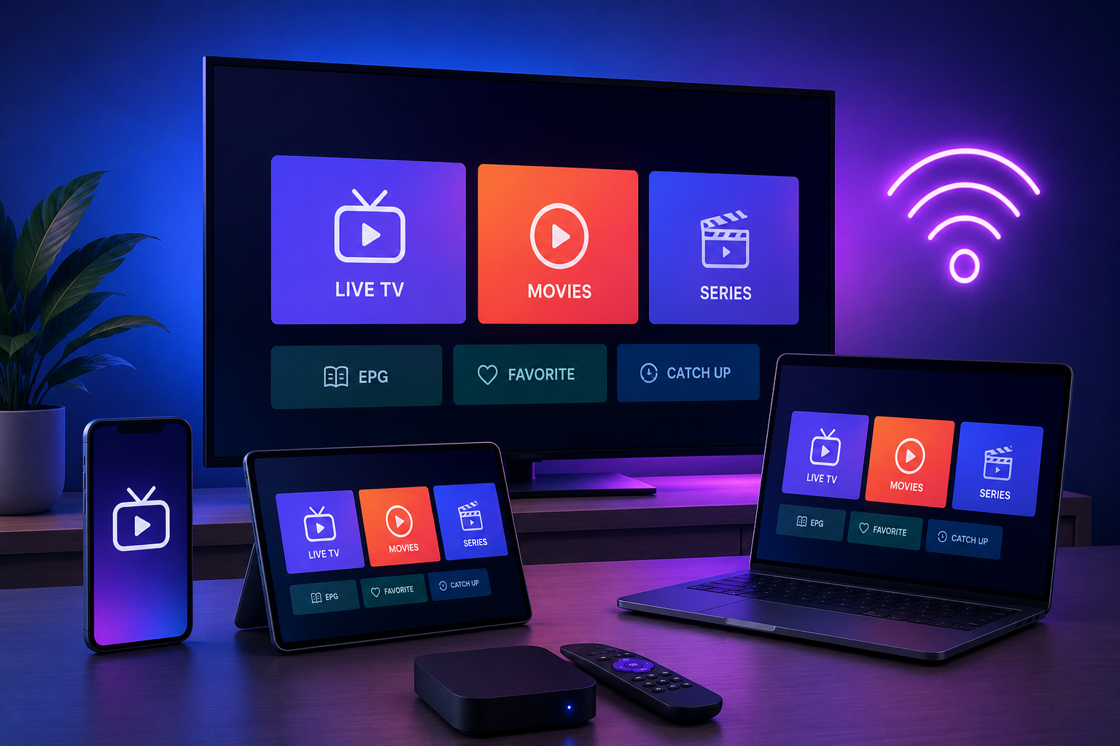
The IPTV service vs cable TV comparison becomes clearer after seeing this model. You don’t need a technician or a dedicated cable line; you need a decent internet plan and a compatible device. That means a reliable ip-tv provider no buffering is half provider, half internet service.
IPTV Service vs Cable TV: Pros and Cons at a Glance
Before you switch, consider the trade-offs. This two-column view covers the real differences between an IPTV subscription and a traditional cable bundle.
Pros of IPTV
- Lower monthly cost than cable in most cases
- Works on smart TVs, phones, tablets and laptops
- Easy access to international channels
- No hardware lock-in or long-term contracts
- Features like EPG, catch-up, 4K sports and cloud DVR
Cons of IPTV
- Depends heavily on your internet speed and stability
- Legal providers may still lack certain local channels
- Setup can be technical for non-tech users
- Support during peak times can be slower than cable support
- Some features require a VPN or a more advanced router
6. Available Options Compared: IPTV vs Cable vs Free Streaming
Not all options on the market belong in the same category. Use this table to decide what kind of service you’re actually buying.
| Option | Best For | Typical Price | Reliability | Legal Status |
|---|---|---|---|---|
| Licensed IP-TV provider (the offer tested in this guide) | Families, sports fans, cord-cutters | $15–$25/month | High | Fully licensed |
| Basic legal IP-TV plan | Budget viewers who only need local channels | $8–$12/month | Medium | Licensed channels |
| Cable TV bundle with streaming apps | People who don’t want to configure anything | $50–$100/month | Very high | Licensed |
| Free ad-supported TV (FAST) | Cord-cutters who accept ads | $0 | Medium | Licensed |
| Unofficial cheap IP-TV reseller | No one | $5–$15/month | Very low | Unlicensed / risky |
Based on the table, the best balance for most families is a licensed ip-tv provider that offers a trial and a fair monthly price. Skip anything that requires an annual commitment from day one.
7. Recommendation by Budget and Needs
If you’re looking for the best ip-tv provider 2026, start with your own viewing habits, not a top-ten list. Here’s how to match your budget and needs to the right kind of service.
Budget viewers
Choose a basic legal IP-TV subscription. You don’t need 20,000 channels; you need the ones you watch every day. Prices for legal entry-level plans usually start around $8 to $12 per month, and a smaller channel list often comes with better image quality and fewer buffering problems.
Sports fans
For an ip-tv provider for sports, budget around $15 to $25 per month and demand a trial on match day. Look for 60fps streams, backup feeds, and low latency. A 4K sports channel is worthless if the frame rate drops the moment the game gets exciting.
Families and multi-room households
Prioritise multiple connections, stable apps, and parental controls. The extra $5 per month for a second connection is worth far more than another thousand channels. Two people watching different live events at the same time is the real test.
People replacing cable
If you’re comparing IPTV service vs cable TV, remember that IPTV will only work as well as your internet connection. If your broadband is below 25 Mbps, fix that first. Once your internet can handle streaming, the best ip-tv provider is the one that offers a free trial and passes every criterion above.
In our testing for this guide, the service linked through the official offer met every criterion on this checklist. You can compare its current plan and price directly here:
Visit the recommended ip-tv provider →8. How to Maximize Your IP-TV Investment
Once you choose a reliable provider, do these things to get the most from your subscription.
- Start with a trial or one-month plan. Use match days, prime time, and a second screen. Then decide.
- Connect your TV by ethernet. Wi-Fi introduces packet loss and buffering. A wired connection makes a visible difference on 4K sports.
- Set up EPG and favourites. A customised guide saves time and makes the service feel like cable, without the cable price.
- Update the app every month. Providers fix bugs, add channels and improve codecs; old versions are the most common cause of playback problems.
- Use a compatible player if the official app is weak. Some providers support TiviMate or IProTV. If the official app works, keep it simple.
- Check the provider’s status page before contacting support. That will tell you whether the problem is on their side or yours.
- Adjust your firewall or VPN settings carefully. A VPN can help with ISP throttling, but only if your provider allows it in their terms.
- Do not buy a “lifetime” plan. Even the best ip-tv provider can’t guarantee lifetime rights for a body of licensed content that changes every year.
Treat your IP-TV subscription like a utility, not a magic box. The provider supplies the streams; you supply a stable network and a clean device. Do that and the value compared to cable TV gets better every month.
Final Subscription Window:
Main Offer Today →Affiliate Disclosure: Clicking this secure link verified by our network supports our team through standard partnership terms at zero extra cost to your invoice.
Frequently Asked Questions
1. How do I choose an IP-TV provider that won’t buffer during live sports?
Look for a provider that names its data centres, offers a match-day trial, and supports 60fps sports streams. Check your own internet speed first, because no provider can fix a connection below the required threshold. Use a wired Ethernet connection and choose a server that reports low latency. A provider that refuses a trial will not suddenly become reliable after you pay.
2. What is the cheapest IP-TV subscription that still includes premium sports?
The cheapest ip-tv subscription with premium sports usually sits in the $15–$25 per month range if the service is legal and licensed. Prices lower than that often mean stolen streams or hidden limits. Add the cost of a second connection if your household watches different matches at the same time. The cheapest plan is the one that gives you reliable 60fps coverage for the leagues you actually follow.
3. Where can I buy IP-TV legally without risking my device or personal data?
Buy directly from a licensed ip-tv provider with a public company profile, secure payment methods, and a refund policy. Avoid resellers who only accept crypto or transfer payments. Legal providers do not ask for unnecessary personal data and they do not force you to sideload unknown apps. If you can pay by credit card and receive a real invoice, your risk drops significantly.
4. Is IPTV service vs cable TV cheaper when you add internet and equipment fees?
IPTV service vs cable TV is usually cheaper on the subscription line, but you must already have fast broadband. Cable companies often bundle internet and TV, so separating internet from an IPTV subscription can change the total. IPTV saves money when you avoid equipment rental fees and long-term contracts. The final comparison depends on your ISP pricing and the channels you need.
5. What should I look for in IP-TV provider reviews on Reddit before buying?
Look for users with real post histories who describe performance during major events, not just “great service” one-liners. Pay attention to repeated complaints about buffering, support delays, and failed refunds. Ignore brand-new accounts that answer every recommendation thread with the same link. Reddit is useful for spotting patterns, but you should still test the provider yourself.
6. Can I test an IP-TV provider for sports quality before I commit to a long plan?
Yes. A good provider offers a 24-hour trial or a one-month subscription that you can cancel. Use that period to watch a live match at peak time, check the frame rate, and test a second device. If the trial works on a random weeknight, it may still fail on Saturday night when traffic is highest. Ask specifically about the provider’s backup streams and peak-hour policy.
7. Does a reliable IP-TV provider no buffering need a special router or internet speed?
A reliable ip-tv provider no buffering experience starts with at least 25 Mbps for HD and 50 Mbps for 4K on a network that is stable. A modern router with QoS settings helps, but it cannot replace a weak broadband plan. Ethernet connection is always better than Wi-Fi for live TV. If multiple people stream at once, add more bandwidth and use a router that supports prioritisation.
8. What hidden fees should I ask about before paying for an IP-TV provider?
Ask about charges for extra simultaneous connections, 4K access, sports add-ons, and device limits. Some providers show a cheap base price and then charge separately for premium content you expected to be included. Ask whether the price includes EPG data, catch-up TV, and cloud DVR. Read the cancellation terms too, because “cancel anytime” sometimes means “pay until the end of your billing year.”